Kerimcan Ozcan · kozcan.com
Organizations are becoming AI-capable faster than they are becoming coherent, accountable, and repairable.
Three things must hold together for AI transformation to create strategic value: leaders responsibly discern which possible futures can become real, translate action into coherent organizational movement, and keep AI-mediated decisions accountable as they cross boundaries. Most organizations are managing one or two of these well.
88%
of organizations now use AI in at least one business function
~1/3
have begun scaling AI programs beyond pilots
The gap isn’t adoption. It’s governable transformation — turning scattered pilots into coherent, accountable organizational movement.
Source: McKinsey, The State of AI — Global Survey, 2025
THE FRAMEWORK
Three movements, one fabric
Each dimension has its own governing question, its own failure mode, and its own governing toolkit—brought together in the Fabric of Coherence framework and grounded in the DRT research program.
POSSIBILITY
Which possible futures can actually become real here — not just imagined?
Forecasts get mistaken for futurity. AI use cases are chosen because they are trending, not because they fit this organization’s specific conditions. Pilots multiply without ever converting into durable capability.
“Pilot purgatory” — the signature failure of unread possibility.
MOVEMENT
How does action become coherent organizational movement — not just more initiatives?
Programs proliferate while the organization itself doesn’t move. Translation fails at the handoffs between teams, practices, and platforms — what one group builds, the next can’t recognize or use.
“More initiatives, no movement” — the signature failure of broken translation.
ACCOUNTABILITY
Where must AI-mediated decisions stay accountable as they cross boundaries?
Decisions break at the seams between functions, partners, and regulators. Evidence and obligations don’t travel with the decision. There’s no repair or rollback discipline when something goes wrong.
“No seam, no accountability” — the signature failure of ungoverned boundaries.
THE INTEGRATION LAYER
Fabric of Coherence
Possibility, movement, and accountability aren’t three separate management problems. They are three threads of one operating discipline. Leaders who hold them together govern transformation. Leaders who treat them separately get governance theater — and eventually, a public failure at whatever seam was left ungoverned. Where warranted, the advisory system carries those questions further into repair, currentness, and cross-case composition—without assuming that every case should travel that far.
Try the optional 5-question orientation
See the questions in real organizations
Abridge
When a promising AI future changes the clinical encounter.
Air Canada
When an AI answer crosses into organizational obligation.
Walmart
When local AI decisions begin accumulating into enterprise effects.
ADVISORY
Three common ways to work together.*
Start with the decision leadership needs to make.
KOZCAN Advisory offers evidence-bounded engagements for consequential AI decisions, mature initiatives, enterprise portfolios, and ongoing executive reliance. A confidential introductory conversation identifies the smallest responsible place to begin.

ENTRY POINT 1
Executive Coherence Briefing
90 minutes · In-person or virtual
A bounded executive orientation for one consequential AI-transformation concern. Clarify what may actually be governing the situation, what evidence and uncertainty matter, and the proportionate next route—including reframe, further evidence, management action, deeper inquiry, or stop.
ENTRY POINT 2
Coherence Diagnostic Sprint
Variable-path · Remote-first
An evidence-bounded diagnostic engagement for one consequential AI initiative or problem. The inquiry follows the case only as far as the evidence warrants—determining what is supported, what may need to change, what must not yet be claimed, and where inquiry should stop.
ENTRY POINT 3
Executive Advisory Retainer
Ongoing · Limited capacity
Keeps prior governance findings fit for present reliance as AI systems, vendors, evidence, workflows, and operating conditions change. Tracks enactment, drift and material change, and triggers controlled re-entry when earlier conclusions should no longer be carried forward unchanged.
* For mature initiatives, multiple candidate cases, enterprise portfolios, and leadership education, KOZCAN Advisory also offers Full-Chain Eligibility, Full-Chain Coherence Review, Enterprise Coherence Portfolio Review, and Board / Executive Advisory & Education.
Not sure where your situation fits? View the 8-entry engagement guide →
You do not need to choose the service yourself. A Confidential Introductory Conversation identifies the smallest responsible place to begin.
Optional: try the 5-question orientation.
THE RESEARCH BASE
Five books across four publishers
KOZCAN Advisory grows out of a research program spanning co-creation, dynamic relationality, organizational transformation, and AI governability.
The research behind the advisory work
A short first-person account of how the research developed and how Fabric of Coherence translates it into an executive operating discipline.
Explore the books and research →
DRT TRILOGY · VOL. 1
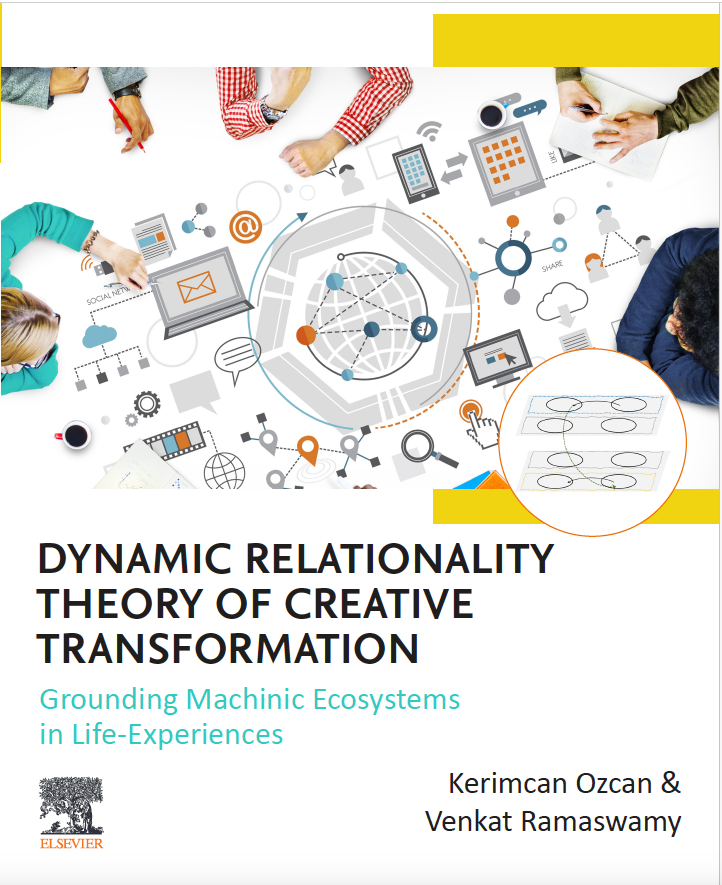
Dynamic Relationality Theory of Creative Transformation
Elsevier, 2024
Relational ontology and foundational theory
DRT TRILOGY · VOL. 2
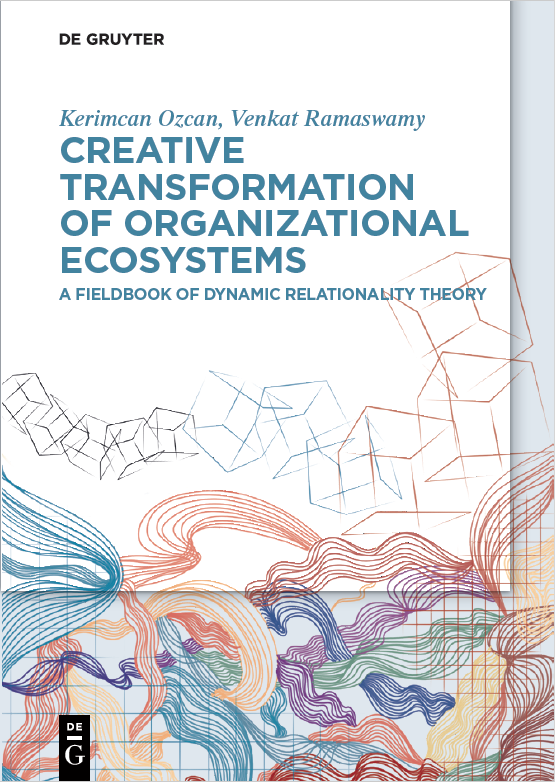
Creative Transformation of Organizational Ecosystems
De Gruyter, 2025
Transformation grammar and intervention architecture
DRT TRILOGY · VOL. 3
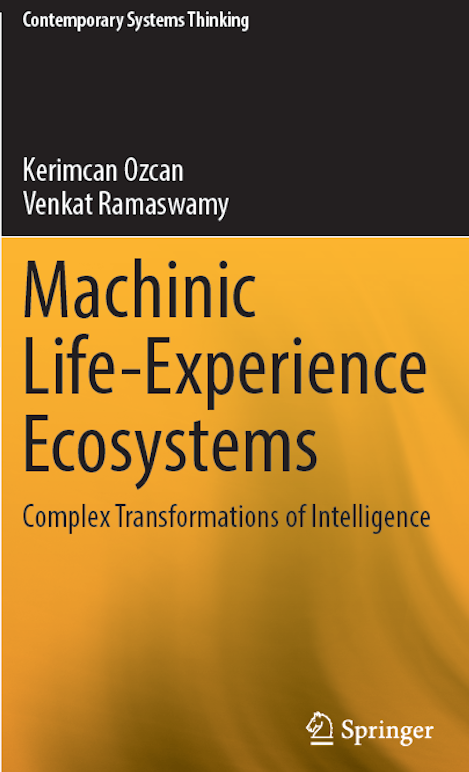
Machinic Life-Experience Ecosystems
Springer Nature, 2027
Standards, evidence, governance, and repair
CO-CREATION STREAM
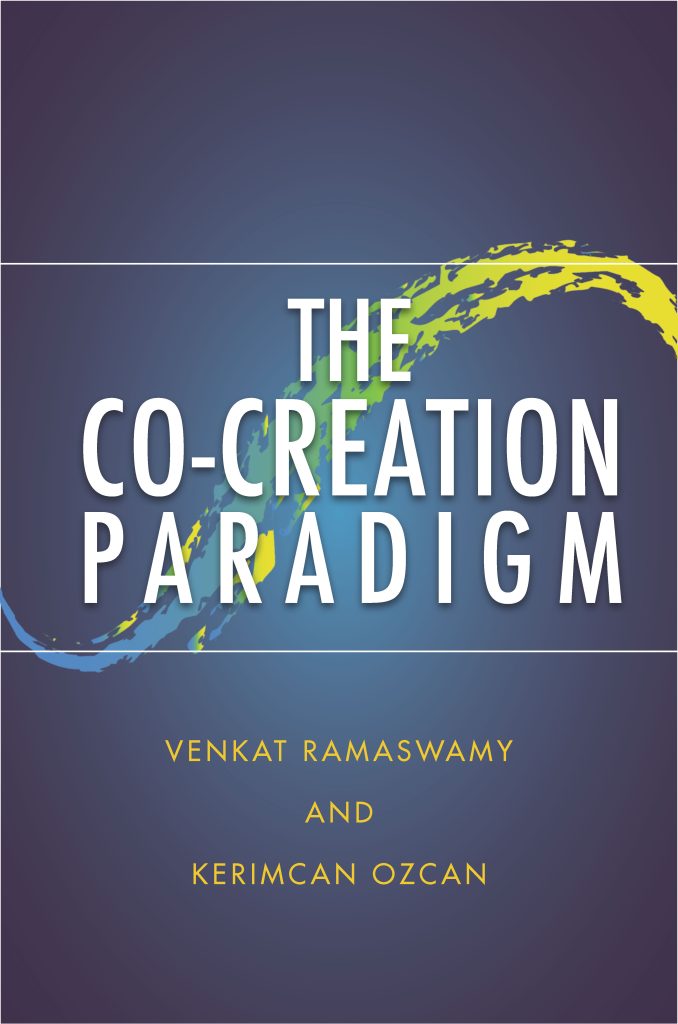
The Co-Creation Paradigm
Stanford University Press, 2014
DART Framework · Engagement Platforms
CO-CREATION STREAM
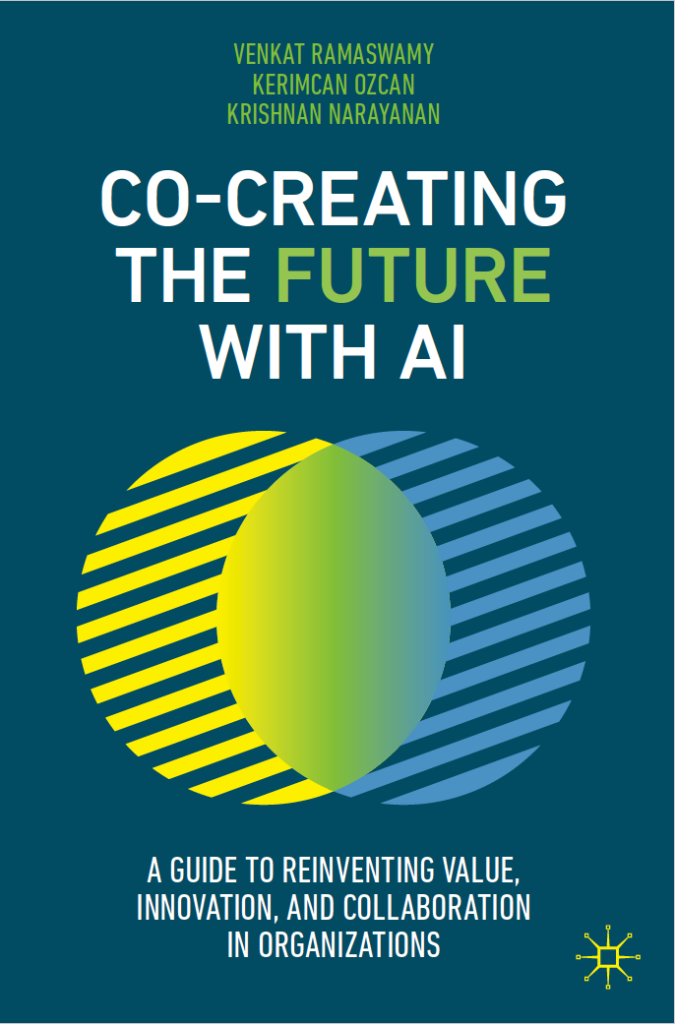
Co-Creating the Future with AI
Palgrave Macmillan, 2026
COIN · Co-Intelligent Organizations
BOOK IN DEVELOPMENT
The Fabric of Coherence
Practitioner-facing synthesis of the research program
Governing AI transformation where possibility, movement, and accountability meet
WRITING
DRT Into Action — 52-week practitioner series
Three posts a week translating the research into executive governance questions, practitioner concepts, and operational artifacts. Each week: a Concept Primer that reframes how a problem should be governed, a Boardroom Reframe that converts it into hard executive questions, and a Playbook Build that produces an artifact ready to use immediately.
Started January 2026 · All back issues available
CONCEPT PRIMER · WEEK 8
Events vs. Initiatives: The Unit of Change Is the Event
Most transformation programs fail in a familiar way: the organization does many things, on schedule, with competent project management — and yet the underlying system stays brittle. DRT treats this as a modeling error: we have been trained to treat initiatives as the primary unit of change. But the system itself does not reorganize around initiatives.
BOARDROOM REFRAME · WEEK 11
From Boxes to Seams: The Governance Object You’re Probably Not Governing
Boards can ‘do governance’ while drift accelerates. They govern boxes, while the system runs on seams. The board’s real object of oversight is not the initiative list — it is the system of decision travel: where does authority actually move, where does accountability thin out, where do evidence rules change as decisions cross interfaces?
PLAYBOOK BUILD · WEEK 8
The Event Ledger and the Reopen → Redesign → Re-stabilize Loop
Most organizations measure event-like material through initiative-shaped proxies: tickets closed, time to resolve, milestones hit, adoption recovered. These metrics are not useless — they are aimed at the wrong object. They track operational closure, not systemic re-stabilization. The Event Ledger treats events as rupture-driven state transitions that propagate across the organization and persist until assumptions have been reopened, couplings redesigned, and stability re-achieved.
Start with the decision.
A Confidential Introductory Conversation is for fit and routing—not diagnosis. Bring the consequential AI decision or situation. We will determine whether KOZCAN Advisory System is relevant and, if so, the smallest responsible place to begin.